
Architecture as a living inheritance
Four towers. Five acres. A design language drawn from Delhi's most enduring stone and court geometry—argued in structure, not ornament.
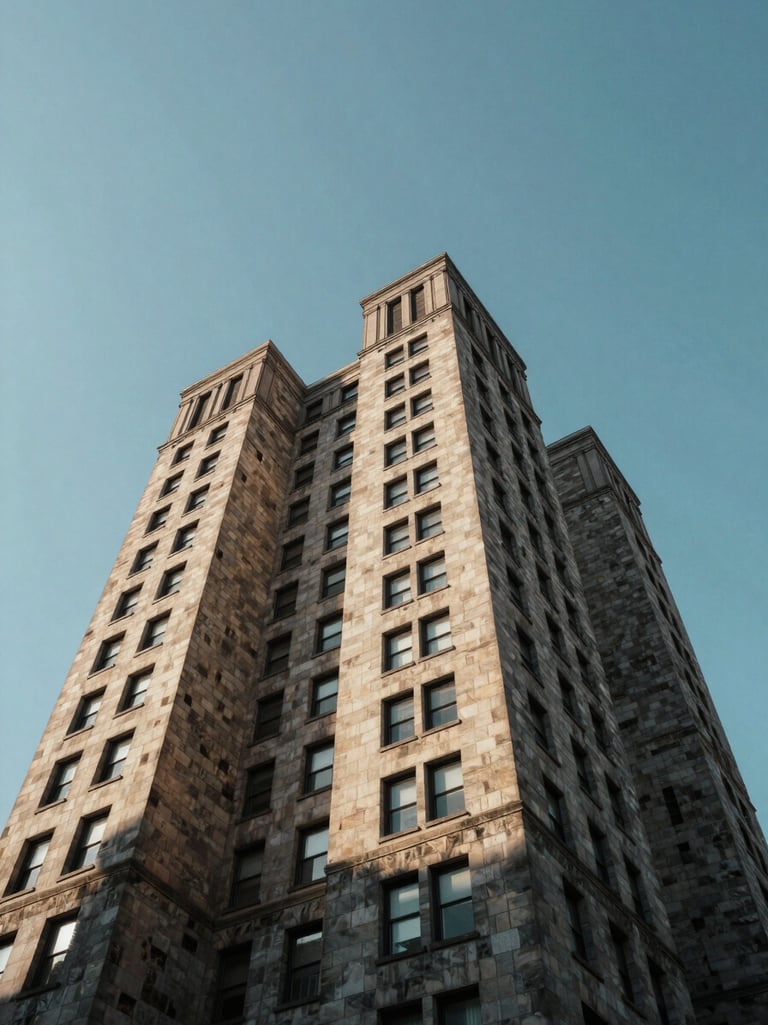
Precision at the scale of ceremony
Perkins Eastman's appointment here was not decorative. Their portfolio spans civic institutions and cultural buildings on three continents—the scale and cultural intelligence show in every decision taken at South Estate.
The brief was deliberate: low coverage, generous air between towers, a ground plane that belongs to residents and green, not to vehicles.
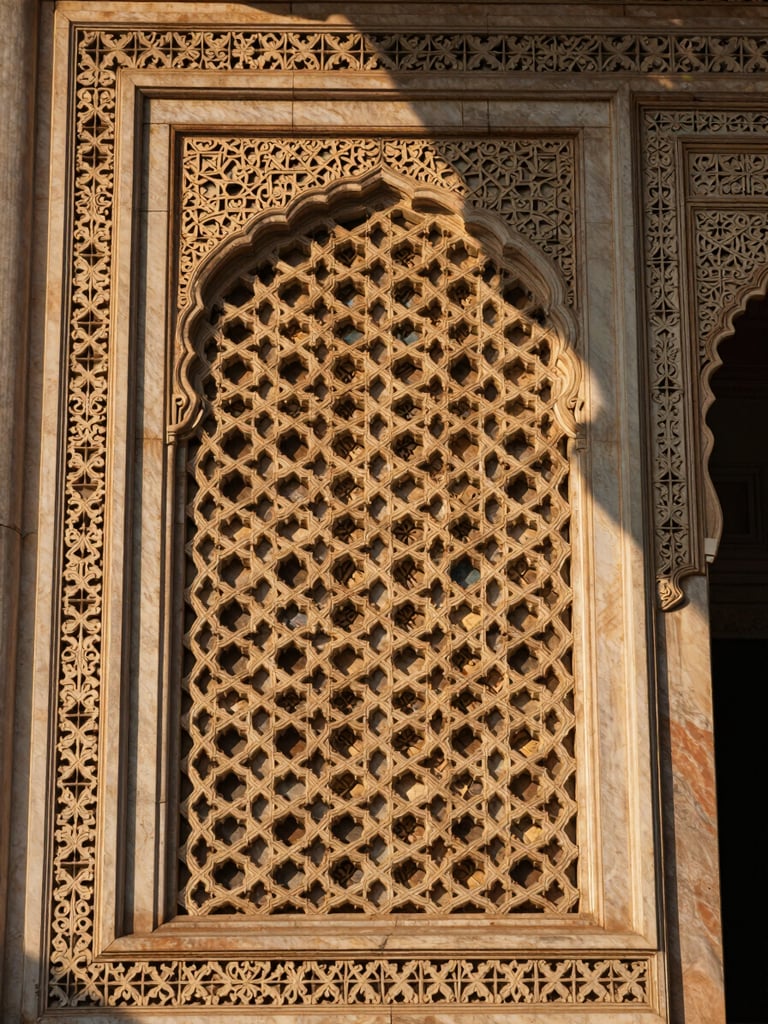
Delhi's ceremonial stone, made structural
The stone cladding draws directly from Rashtrapati Bhawan's material grammar. Not a reference—a continuation. The jali patterns are lifted from Mughal court geometry and redrawn as a building-scale system.
Both choices read as honest material at close range and as architectural rhythm at distance. That double register is the test of whether heritage is structural or cosmetic.
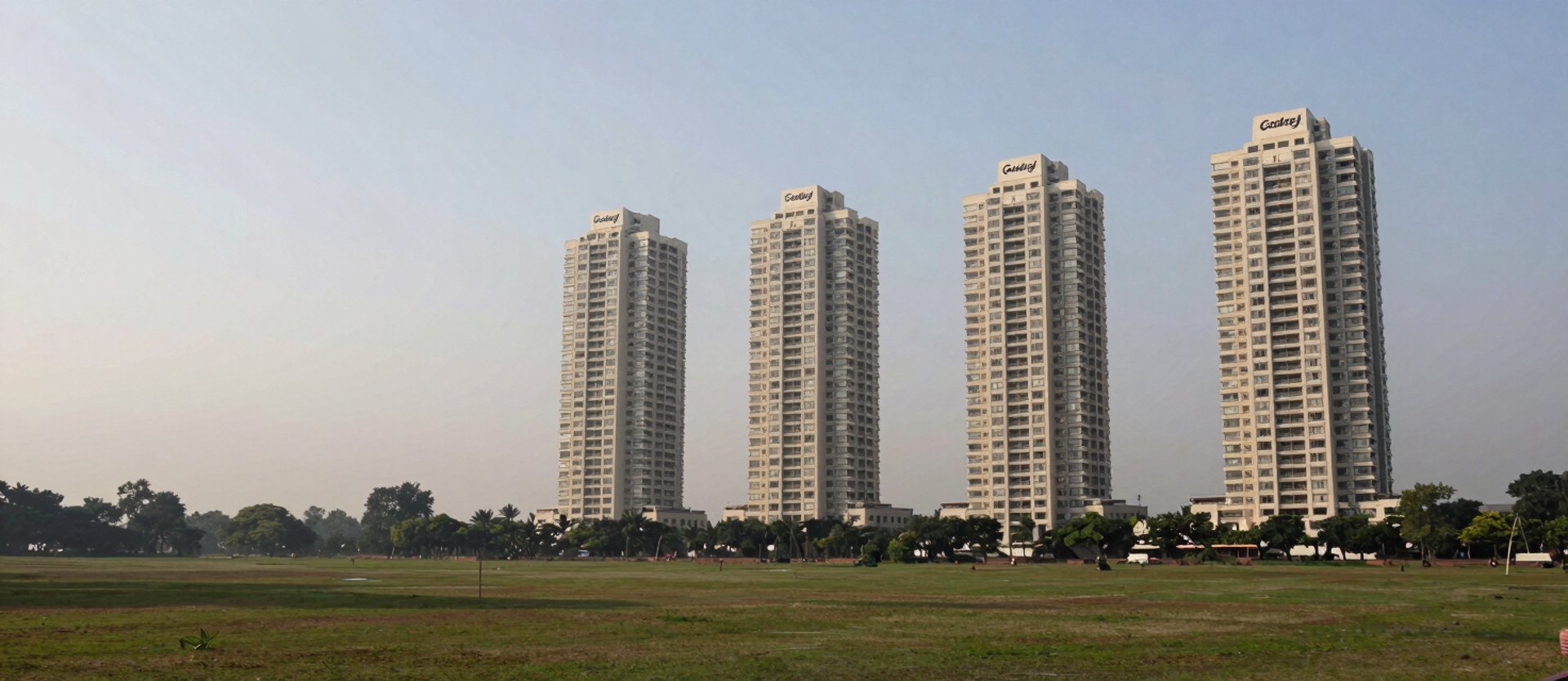
Height and air chosen over coverage
Seventy percent of the site remains open ground. Four towers on 5.25 acres is an act of restraint—the spacing between them is as considered as the towers themselves.
The architecture earns its ground
See how the spatial decisions made at the building scale translate into the apartments themselves—balconies, volumes, and the quiet that comes from genuine low density.